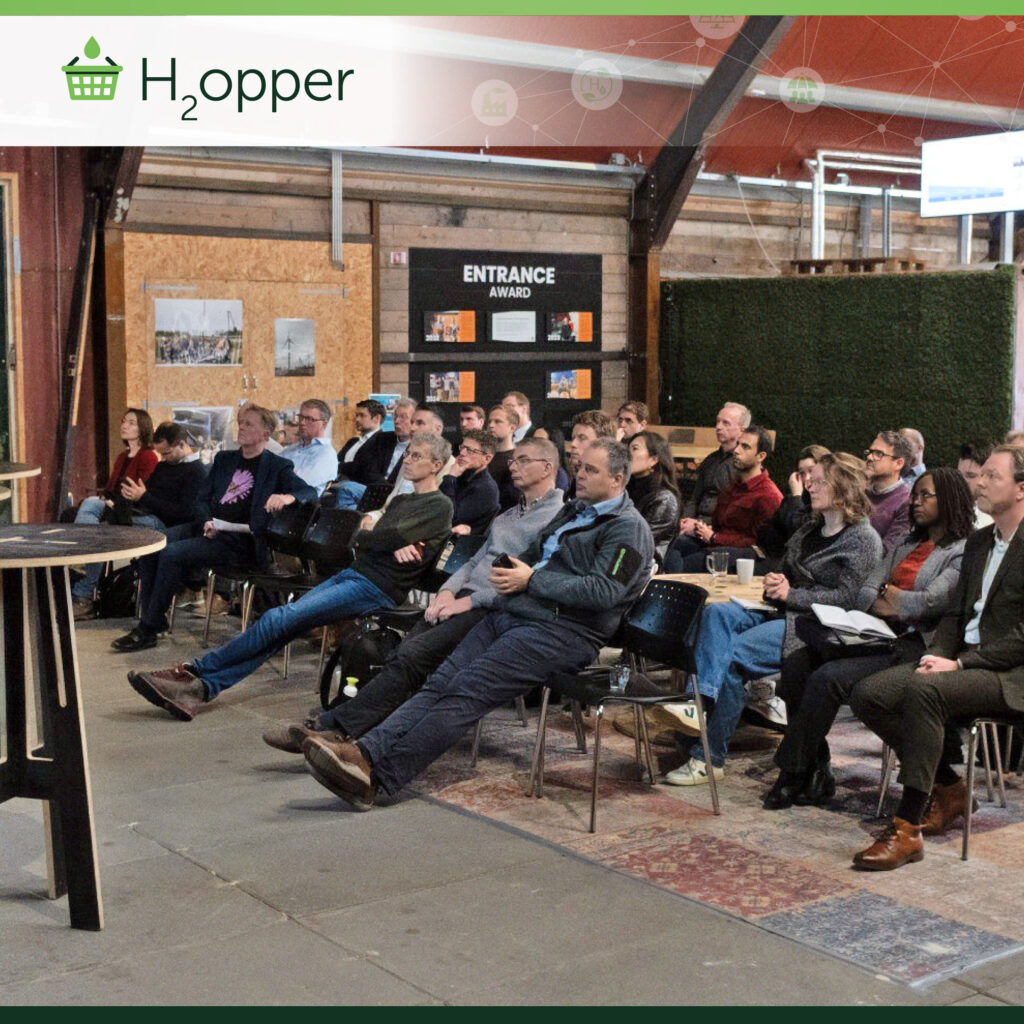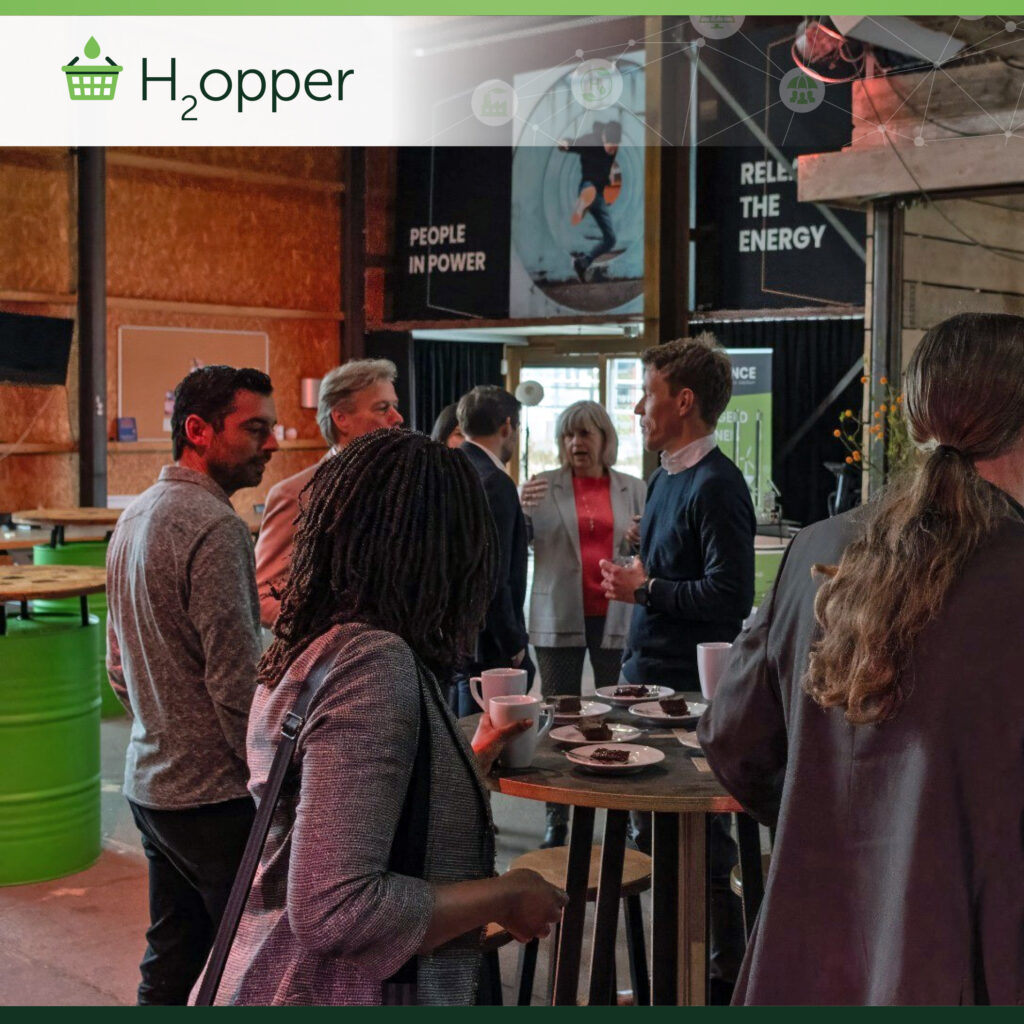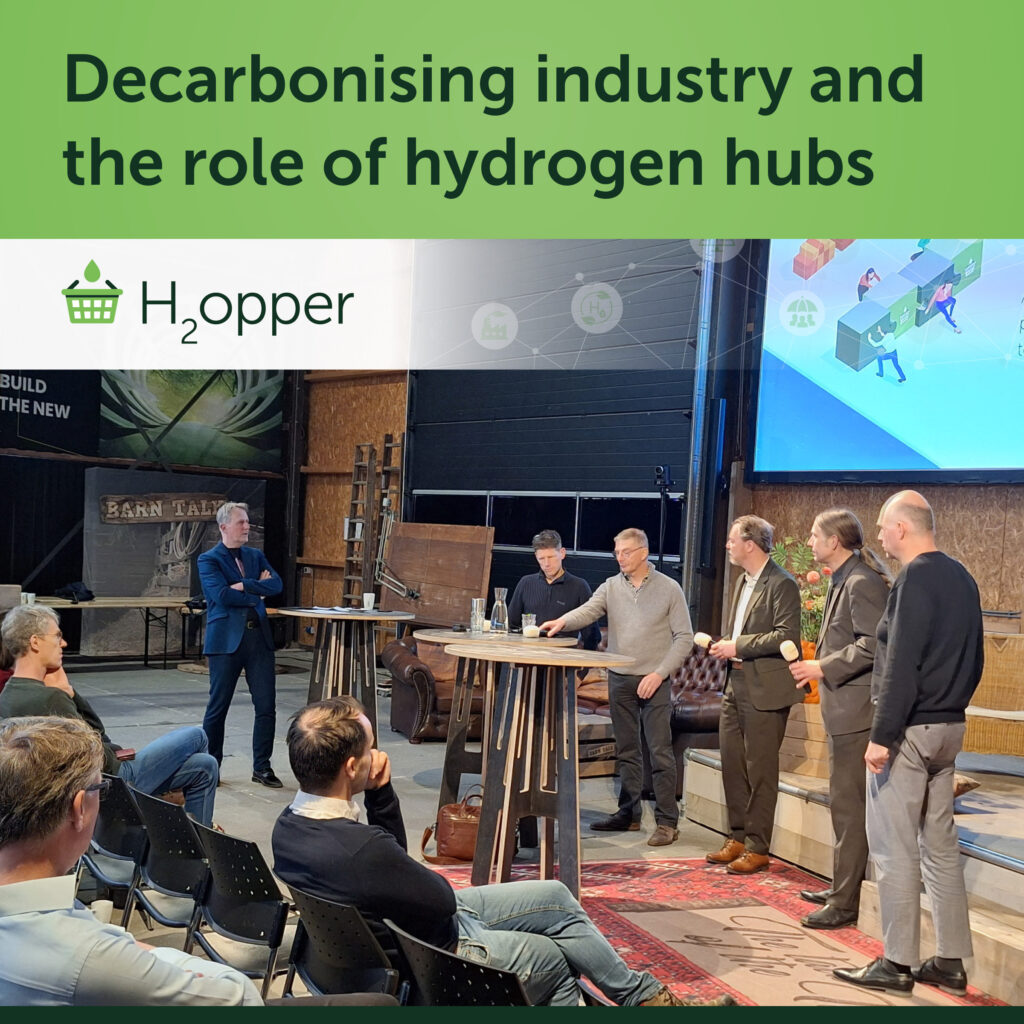
Last Friday, February the 13th, the H₂opper team organised a session on “decarbonising industry and the role of hydrogen hubs”. Professionals from industry, regional government, research and education gathered in the Energy Barn at EnTranCe on Zernike Campus in Groningen.
After a warm welcome by H₂opper host Marcel Koenis, the kick-off keynote by Shane Heffernan (Director, Strategy & Commercial Advisory Clean Molecules at Baringa Partners) showed that although progress maybe has been slower than hoped for, it is clearly there and there are learnings from the development of UK-clusters that the Netherlands can benefit from, e.g. not being overly stringent on what qualifies as low-carbon electricity.
The follow-up presentation by Anouk Van Loon (Transition Officer for Decarbonisation at Tata Steel) showed their impressive Dutch decarbonisation roadmap, combining phased implementation with major investments to achieve significant CO₂ reductions while safeguarding competitiveness.
After the break, a panel discussion with Marcel Volkerts (Baringa Partners), Mark Breed (TNO), Hendrik van der Ploeg (Groningen Seaports), James Hallworth (Port of Amsterdam) and Jarno Dakhorst (Ministry of Climate Policy and Green Growth) underlined that hydrogen hubs in clusters are essential to locally match supply and demand, improve commercial feasibility and enable future national and international scaling.
Conclusions from the session were the following:
1. Industry recognizes the need to become sustainable but it needs to maintain profitability
2. Green hydrogen can fulfil an important role in the decarbonisation of industry
3. A hub-based approach creates independence from national transmission networks and increases commercial feasibility
4. Industry needs a stable, consistent policy framework supported by incentive schemes that cover the value chain
A special thanks to the keynote speakers and panel participants for their contribution. Further a special thanks to all others who made this a really great event.